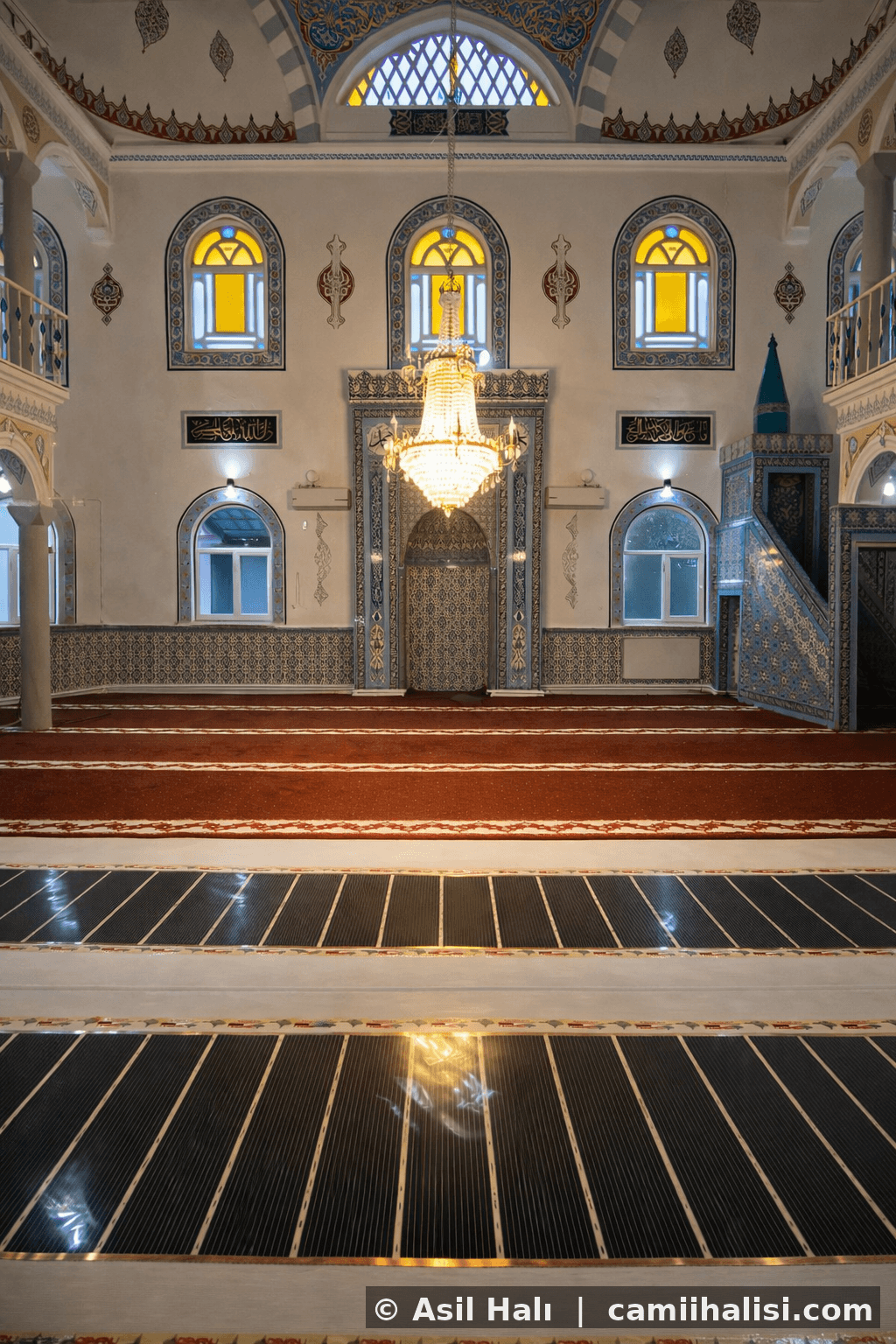
The most comprehensive answer to how to remove mosque carpet odor is in this article. To permanently eliminate moisture, sweat, and foot odor, prefer polypropylene-polyamide blend Axminster woven mosque carpets with m² weight of 2500 gr and above, 300,000 loops/m² density, and 6-12 mm pile height. Technical features such as antistatic yarn, high moisture absorption backing materials, and flame retardancy certificate EN 13501-1 prevent odor from the start. Discover non-impression and odor-resistant latex/PVC backing details in saflı mosque carpet, göbekli mosque carpet, and seccadeli mosque carpet models. Beyond superficial home solutions, keep your mosque carpets fresh for years by applying professional methods derived from 50 years of experience and thousands of mosque references.
How to Remove Mosque Carpet Odor? Permanent Solutions and Technical Recommendations
The question of how to remove mosque carpet odor is one of the most common problems faced by thousands of mosque administrators. This odor, caused by moisture, sweat, foot odor, and insufficient air circulation, negatively affects the worship environment and shortens the carpet's lifespan in the long term. In this article, we go beyond superficial solutions and address technical carpet features, raw material types, and professional maintenance methods.
Why Does Odor Form in Mosque Carpets?
The main cause of odor formation in mosque carpets is their moisture retention capacity. Thousands of footprints, sweat, and moisture accumulate during daily use. This moisture is easily trapped especially in carpets with low weight and insufficient loop density. Carpets with m² weight of 2500 gr and above retain less moisture. Additionally, when pile height is kept between 6-12 mm, air circulation increases and odor formation is largely prevented.
Preventing Odor with Technical Features
Polypropylene + polyamide blend yarns, thanks to their antistatic structure, prevent static electricity buildup and reduce dust and moisture adhesion to the carpet. In carpets produced with Axminster weaving technique, gaps between loops allow air flow. Saflı mosque carpet models woven at 300,000 loops/m² and above stand out with their non-impression feature.
In special woven models such as göbekli mosque carpet and seccadeli mosque carpet, the use of odor-resistant backing (latex or PVC) is of critical importance. These backing materials provide a permanent solution by reducing the moisture absorption rate. Products with flame retardancy certificate EN 13501-1 should be preferred for both safety and hygiene.
50 Years of Experience and Field Data
Asil Halı’s 50 years of experience and 10,000+ mosque references guide the selection of carpet types that prevent odor from the start. According to field data, high-weight, antistatic yarn, and appropriate pile height carpets do not experience odor problems for 5 years. Therefore, when purchasing mosque carpets, technical features should be considered in addition to price.
Practical Cleaning Procedures
To remove existing odor, the carpet should first be thoroughly vacuumed, followed by spot treatment with a vinegar and baking soda mixture. However, for a permanent solution, professional carpet cleaning machines and moisture-absorbing powders should be used. Sun drying also ensures complete removal of moisture.
Conclusion
The answer to how to remove mosque carpet odor lies in both correct carpet selection and regular maintenance. When attention is paid to technical details such as m² weight, loop density, pile height, polypropylene-polyamide blend, and odor-resistant backing, the problem is solved at its root. By choosing the appropriate model among saflı, göbekli, and seccadeli options, you can keep your mosques fresh at all times.