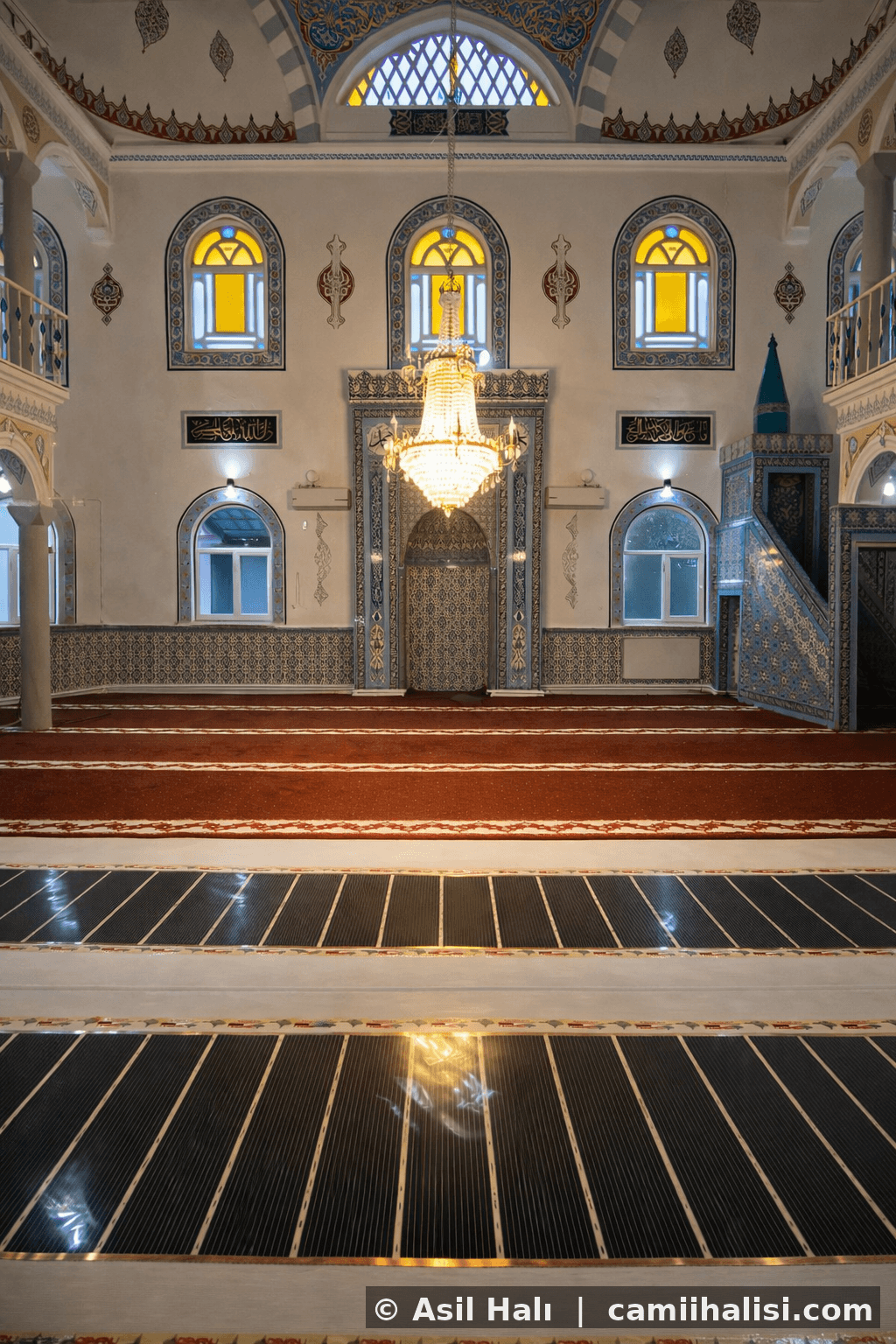
Is the antibacterial feature really necessary when choosing mosque carpets? In this comprehensive guide, we examine technical criteria such as m² weight, knot density, pile height, antistatic structure, and flame retardancy certificates. By comparing acrylic, wool, polypropylene, and polyamide 6.6 raw materials, we explain the benefits of antibacterial yarn (silver ion or zinc ion) in terms of hygiene and longevity for saflı, göbekli, and seccadeli mosque carpet models. Prepared with our 50 years of experience and 10,000+ mosque references, this article also discusses how features like chemical bonding backing, no imprinting, and easy cleanability simplify maintenance after prayer.
The question of whether mosque carpets should be antibacterial is a critical topic frequently asked by mosque administrators and carpet suppliers today. Due to high human traffic in mosques, maintaining high hygiene standards is essential. Therefore, carpets with antibacterial properties create a healthier worship environment by preventing the growth of bacteria and microorganisms.
Why is the Antibacterial Feature Important in Mosque Carpets?
Mosque carpets are in constant contact with feet. This leads to the accumulation of sweat, dirt, and microbes on the carpet surface. When silver ion or zinc ion antibacterial yarns are used, the proliferation of these microorganisms is prevented by 99%. This feature ensures the carpet maintains its effectiveness for up to 50 years.
Technical Specifications and Quality Criteria
A quality mosque carpet should have a minimum m² weight of 2000 g/m². The higher the knot density (knots/dm²), the greater the durability and comfort of the carpet. Pile height provides a soft feel underfoot. These technical values also contribute to preserving the antibacterial feature for a long time.
Acrylic and Wool Raw Material Comparison
Acrylic carpets are affordable and easy to clean, while wool carpets offer natural antibacterial properties. However, additional antibacterial treatment is recommended for wool models.
Polypropylene Filament and Polyamide 6.6
Carpets with polypropylene filament yarn do not retain moisture and dry quickly. Polyamide 6.6 is extremely resistant to abrasion. In both types, the use of antibacterial yarn raises the hygiene level.
Saflı Mosque Carpet Models
Saflı mosque carpets offer ideal solutions for large areas. When the antibacterial feature is added, hygiene standards in saflı models increase significantly.
Göbekli Mosque Carpet and Hygiene
Göbekli mosque carpets feature special motifs in the center. Using antibacterial yarn together with antistatic properties in these models prevents static electricity buildup and bacterial formation.
Seccadeli Mosque Carpet Preferences
Seccadeli mosque carpets have patterns tailored for worshippers. The combination of antibacterial + flame retardancy certificate (EN 13501-1) makes these carpets the safest option.
Flame Retardancy and Antistatic Features
Antibacterial yarn does not negatively affect the carpet's flame retardancy certificate. On the contrary, both features can be provided simultaneously with modern production techniques. The antistatic structure reduces dust accumulation and provides easy cleaning.
50 Years of Experience and 10,000+ Mosque References
As Asil Halı, with our 50 years of experience, the mosque carpets we produce are successfully used in more than 10,000 mosques. We make a difference with our no-imprint texture, chemical bonding backing, and easy cleanability features.
Conclusion and Recommendations
The answer to the question of whether mosque carpets should be antibacterial is clear: Yes, especially in heavily used mosques, carpets with antibacterial properties should be preferred. We recommend checking m² weight, knot density, and flame retardancy certificates when making your selection.